
Do you have a Ritual Deficit? The hard work of ceremony is directly impacting your bottom line.
Picture the last major transition your organization went through: a reorg, a merger integration, a layoff, a leadership succession, even a strategic pivot. Somewhere in your planning process, a familiar set of deliverables took shape. These actions are necessary as part of any organizational transition. It is also the default in an executive’s playbook. Unfortunately, these actions are necessary but not sufficient. Primarily because it treats the major change as a tactical problem, like rearranging the deck chairs around a pool. It makes assumptions that if we communicate effectively, individuals and teams will interpret and ultimately understand the change in the “right” way. Most leadership teams plan for the structure of change and the mechanics of milestones. Very few plan for what people are losing, what story explains why any of it matters, or how the ending of one chapter is marked before the next one begins.
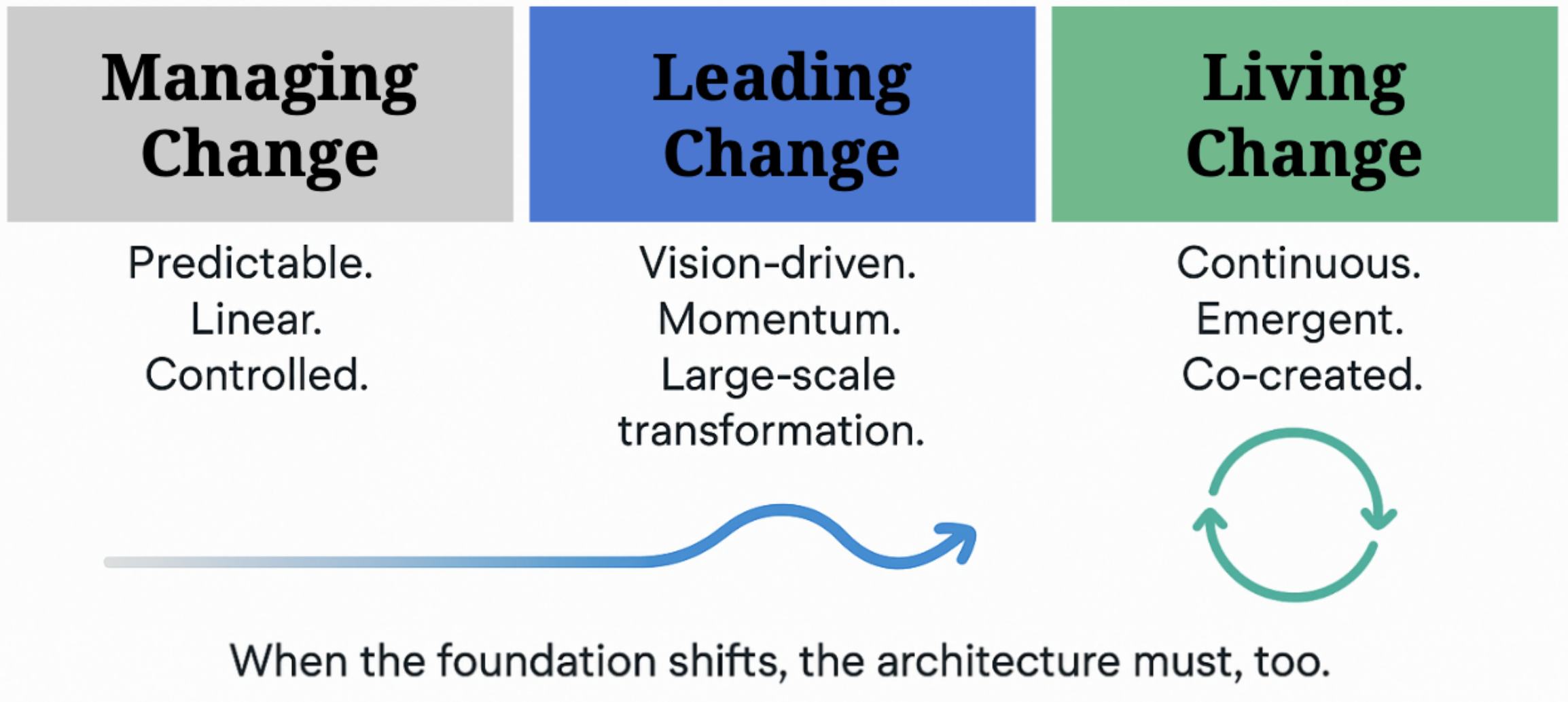
What does it mean to live change? Hint: The answer isn’t in a playbook
Like many of you, my leadership training reinforced the idea that change could be planned, managed, and measured—that if I built a thoughtful plan, people would move through each stage in sequence and success was more likely. Buy-in and momentum would build over time.
But organizations today require something different. And while systems are shifting, people are too. Employees are navigating the same uncertainty—grappling with exhaustion, rising costs of living, job insecurity, and questions of purpose and belonging. The ground keeps shifting beneath individuals and institutions, making the old playbooks feel obsolete.